

ChatGPT remembers everything said earlier in the same chat, which lets you refine answers instead of starting over. Here's how to use that effectively.
Asking Follow-Ups in the Same Chat
This part shows how a follow-up question builds directly on the previous answer, without repeating context.
A follow-up question works because ChatGPT keeps the full conversation in memory, so you don't need to repeat earlier details.
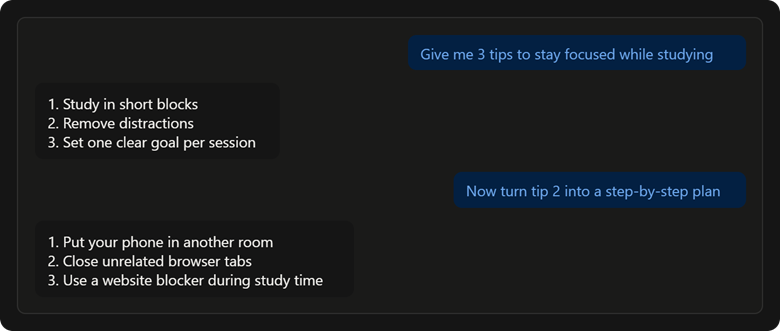
This picture shows a follow-up question referencing "tip 2" without repeating it — ChatGPT understood exactly which tip was meant, using the earlier conversation as context.
Why it works: Because the earlier answer is still in the chat's memory, "tip 2" alone was enough — no need to restate the original list.
Refining Previous Answers
This part shows how to push ChatGPT to improve or adjust an answer it already gave you.
Refining means asking ChatGPT to change tone, length, format, or detail in a response it already gave, instead of writing a brand-new prompt from scratch.
Example prompts for refining:
- "Make that shorter"
- "Make it sound more casual"
- "Add an example to point 2"
- "Rewrite this for a beginner audience"
Comparison Table: Refining Prompts
This table shows common refinement requests and what they actually change in the response.
| Refinement Prompt | What It Changes |
| "Make it shorter" | Length |
| "Make it more formal" | Tone |
| "Turn this into bullet points" | Format |
| "Explain like I'm a beginner" | Complexity level |
When to Start a New Chat vs Continue
This part explains when sticking with the same conversation helps, and when it starts to hurt your results.
Continue the same chat when your next question builds on what was already discussed. Start a new chat when you're switching to a completely unrelated topic, since old context can confuse or slow down the new answer.
Example: If you're refining a resume bullet point, stay in the same chat. If you're now asking about meal planning, start fresh — carrying over resume context serves no purpose there.
Conclusion
Follow-up questions let you build on previous answers without repeating yourself, and refining prompts let you fine-tune tone, length, or format on the spot. Stay in the same chat when topics are related, and start a new one when they're not — this keeps both conversations focused and easy to find later.